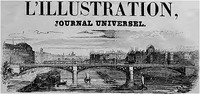
L'Illustration, No. 0019, 8 Juillet 1843 by Various

(5 User reviews)   1234
Various Various
French
Hey, have you ever wanted a time machine? I just found the next best thing. This isn't a novel—it's a single, original issue of a French weekly magazine from July 1843. It’s like opening a window and stepping right into the middle of Parisian life. You’ll find everything from political cartoons and fashion plates to a bizarre story about a man who swallows a living frog. The main 'conflict' is the whole messy, vibrant, pre-photography world trying to explain itself through pictures and words. It’s chaotic, fascinating, and completely unpredictable. If you're tired of the same old stories, this is a wild ride.
Share

Read "L'Illustration, No. 0019, 8 Juillet 1843 by Various" Online

This book is available in the public domain. Start reading the digital edition below.

START READING FULL BOOK
Instant Access    Mobile Friendly

Book Preview

A short preview of the book’s content is shown below to give you an idea of its style and themes.

brilla con alternativas de opacidad y vigor en la Metrópoli castellana. Desde el manso e ingenuo Fernán González de Eslava, han ido a abrevarse nuestros dramaturgos en las fuentes del teatro español, y el teatro español sigue siendo en nuestros días, si no la única, sí cuando menos la corriente más caudalosa que satisface nuestras aficiones escénicas. En el amplio y espacioso tablado de la escena hispana, no ya formado con los “cuatro bancos y cuatro o seis tablas encima” de la época de Lope de Rueda, sino acondicionado con los arreos más vistosos que la imaginación cómica y los arrebatos trágicos le puedan prestar, debe buscarse el desarrollo de nuestro teatro y estudiarse a sus autores. El alma española ha tenido siempre un rincón dedicado a las disquisiciones filosóficas, al eterno aspirar al cielo, a la sutil dialéctica que se manifestaba en voluminosos tratados de Teología y Metafísica, en rectilíneos compendios de Ascética, en ardientes coloquios místicos: Suarez, Vives, los Luises, Santa Teresa, San Juan de la Cruz. El teatro, que es el más fiel espejo del alma de los pueblos, y más un teatro que arrancaba como el español de lo más profundo de la conciencia nacional, formado por el caudal épico de las primitivas gestas heroicas, vaciadas en el romance y volcadas en la escena, por una parte, y por otra la inagotable vena satírica, la visión de la realidad pujante y vigorosa retrada y aprisionada en las novelas por artífices geniales, ramas de aquel tronco exúbero que se llamó el Arcipreste de Hita, y que halla su expresión más cálida en una novela que es a la vez drama: _La Celestina_, arco triunfal con que se abren los Siglos de Oro, el teatro, pues, que es compendio y cifra de ese espíritu nacional, tiene en D. Pedro Calderón de la Barca su poeta teológico y metafísico por excelencia; lo caballeresco, lo aventurero, lo bizarro, tan genuino y natural en aquellos tiempos cercanos al Renacimiento, lo reivindica para sí el Fénix de los Ingenios; lo picaresco, lo amable y picante de la vida, brota de la pluma del mercedario Fray Gabriel Téllez, que también a las veces es profundo creador de caracteres trágicos. D. Agustín de Moreto conoce como ninguno de sus colegas el secreto del _métier_, es el técnico por excelencia del teatro español; hasta la verbosidad lírica tiene su expresión en las tiradas del D. _García del Castañar_ del sevillano D. Francisco de Rojas y Zorrilla. No se agota ahí todo: España poseía vastas y dilatadas colonias aquende el Atlántico, poseedoras, en sus habitantes, de una alma que ya comenzaba a diferenciarse de la peninsular, ya surgía la rivalidad y el odio que habían de estallar tres siglos más tarde entre naturales y advenedizos y que campea en los sonetos encontrados por García Icazbalceta. Esa alma criolla, caracterizada por “la discreción, la sobria mesura, el sentimiento melancólico crepuscular y otoñal que van concordes con este otoño perpetuo de las alturas, bien distinto de la eterna primavera fecunda de los trópicos: este otoño de temperaturas discretas que jamás ofenden, de crepúsculos suaves y de noches serenas” que pinta Pedro Enríquez Ureña, ese rincón del alma de la raza, se incorpora también al torrente del teatro castellano y es expresado por el más alto dramaturgo que ha producido la América española D. Juan Ruiz de Alarcón, el más mexicano, después de Sor Juana, que viviera en el coloniaje, y uno de los más mexicanos que hayan nacido en la República. D. Juan Ruiz de Alarcón es ante todo y sobre todo “el clásico de un teatro romántico...

This is a limited preview. Download the book to read the full content.

Let's be clear: this isn't a book with a traditional plot. L'Illustration was one of the world's first fully illustrated news magazines. This specific issue, from a hot July week in 1843, is a snapshot of everything that mattered (or was just interesting) at that exact moment. You'll flip from a detailed engraving of a new railway station to a report on a volcano in the Philippines. There's a serialized novel installment, reviews of Parisian theater, and even a guide on how to breed silkworms. The 'story' is the story of a week in the 19th century, told by the people who were living it.

Why You Should Read It

Reading this feels like detective work. You're piecing together a worldview from the ads, the art, and the articles. The fashion section tells you what people valued; the political cartoons show you what they feared or laughed at. It’s raw, unfiltered history without a textbook summary getting in the way. The sheer variety is the point—one minute you're looking at a solemn portrait of a diplomat, the next you're reading a strangely earnest medical account of that frog-swallowing incident. It’s hilarious, shocking, and profoundly human.

Final Verdict

Perfect for curious minds who love history, art, or just weird old stuff. If you enjoy museums, archives, or falling down Wikipedia rabbit holes, you'll adore this. It's not a passive read; it's an exploration. You won't get a neat narrative, but you will get something better: a genuine, messy connection to the past. Keep your phone handy to look things up—half the fun is chasing down the references to forgotten events and people.


⚖️ Free to Use

This publication is available for unrestricted use. Preserving history for future generations.

Michelle Davis
1 month ago

After looking for this everywhere, the insights offered are both practical and thought-provoking. This left a lasting impression on me.

Lisa Hall
1 month ago

This stood out immediately because the clarity of explanations makes revisiting sections worthwhile. This turned out to be a great decision.

Ashley Miller
1 month ago

This stood out immediately because the clarity of explanations makes revisiting sectiosn worthwhile. It exceeded all my expectations.

Matthew Davis
3 months ago

This was recommended to me by a colleague and the style is confident yet approachable. A valuable addition to my digital library.

Richard Rodriguez
2 months ago

Having explored similar works, the presentation of ideas feels natural and engaging. A true masterpiece of its kind.


5
5 out of 5 (5 User reviews )

Add a Review

Your Rating *
There are no comments for this eBook.
You must log in to post a comment.
Log in

Related eBooks