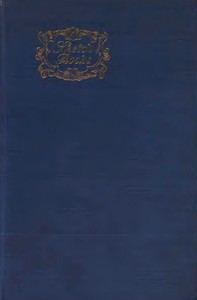
The Paris Sketch Book of Mr. M. A. Titmarsh; and the Irish Sketch Book by Thackeray

(5 User reviews)   1231
Thackeray, William Makepeace, 1811-1863 Thackeray, William Makepeace, 1811-1863
English
So, you know how everyone thinks of Paris and Ireland as these magical, romantic places? Thackeray, writing under his pen name Mr. M. A. Titmarsh, decided to take a walk. This isn't a grand adventure novel—it's the sharp, funny, and sometimes grumpy travel diary of a keen observer. In Paris, he wanders from grand galleries to smoky cafes, poking fun at art and society. Then, he hops over to an Ireland still reeling from political and economic hardship, offering a raw, ground-level view most tourists miss. The real story is in the clash between the glossy postcard image and the messy, vibrant reality he finds. It’s like having the world’s most witty and slightly cynical tour guide all to yourself.
Share

Read "The Paris Sketch Book of Mr. M. A. Titmarsh; and the Irish Sketch Book by Thackeray" Online

This book is available in the public domain. Start reading the digital edition below.

START READING FULL BOOK
Instant Access    Mobile Friendly

Book Preview

A short preview of the book’s content is shown below to give you an idea of its style and themes.

monstrous trouble of unpacking that which has taken you weeks to put up. Nine, ten, eleven, the distinguished foreigner is ever at your side; you find him now, perhaps (with characteristic ingratitude), something of a bore, but, at least, he has been most tender to the children and their mamma. At last a Boulogne light comes in sight (you see it over the bows of the vessel, when, having bobbed violently upwards, it sinks swiftly down), Boulogne harbour is in sight, and the foreigner says: The distinguished foreigner says, says he--‘Sare, eef you af no ‘otel, I sall recommend you, milor, to ze ‘Otel Betfort, in ze Quay, sare, close to the bathing-machines and custom-ha-oose. Good bets and fine garten, sare; table-d’hôte, sare, à cinq-heures; breakfast, sare, in French or English style;--I am the commissionaire, sare, and vill see to your loggish.’ ...Curse the fellow, for an impudent, swindling, sneaking, French humbug!--Your tone instantly changes, and you tell him to go about his business; but at twelve o’clock at night, when the voyage is over, and the custom-house business done, knowing not whither to go, with a wife and fourteen exhausted children, scarce able to stand, and longing for bed, you find yourself, somehow, in the Hôtel Bedford (and you can’t be better), and smiling chambermaids carry off your children to snug beds; while smart waiters produce for your honour--a cold fowl, say, and a salad, and a bottle of Bordeaux and seltzer-water. * * * * * The morning comes--I don’t know a pleasanter feeling than that of waking with the sun shining on objects quite new, and (although you may have made the voyage a dozen times) quite strange. Mrs. X. and you occupy a very light bed, which has a tall canopy of red _percale_; the windows are smartly draped with cheap gaudy calicoes and muslins; there are little mean strips of carpet about the tiled floor of the room, and yet all seems as gay and as comfortable as may be--the sun shines brighter than you have seen it for a year, the sky is a thousand times bluer, and what a cheery clatter of shrill quick French voices comes up from the courtyard under the windows! Bells are jangling; a family, mayhap, is going to Paris _en poste_, and wondrous is the jabber of the courier, the postillion, the inn-waiters, and the lookers-on. The landlord calls out for ‘Quatre biftecks aux pommes, pour le trente-trois’--(O my countrymen! I love your tastes and your ways!)--the chambermaid is laughing, and says, ‘Finissez donc, Monsieur Pierre!’ (what can they be about?)--a fat Englishman has opened his window violently, and says, ‘Dee dong, garsong, vooly voo me donny lo sho, ou vooly voo pah?’ He has been ringing for half an hour--the last energetic appeal succeeds, and shortly he is enabled to descend to the coffee-room, where, with three hot rolls, grilled ham, cold fowl, and four boiled eggs, he makes what he calls his first _French_ breakfast. It is a strange, mongrel, merry place, this town of Boulogne; the little French fishermen’s children are beautiful, and the little French soldiers, four feet high, red-breeched, with huge _pompons_ on their caps, and brown faces, and clear sharp eyes, look, for all their littleness, far more military and more intelligent than the heavy louts one has seen swaggering about the garrison towns in England. Yonder go a crowd of bare-legged fishermen; there is the town idiot, mocking a woman who is screaming ‘Fleuve du Tage,’ at an inn-window, to a harp, and there are the little gamins mocking _him_. Lo!...

This is a limited preview. Download the book to read the full content.

Forget a single plot—this book is a collection of journeys. ‘The Paris Sketch Book’ finds our narrator, Mr. Titmarsh, roaming the French capital in the 1840s. He visits art exhibitions (and has strong opinions), describes street scenes, and shares anecdotes about the people he meets, all with a satirical eye. It’s less a guidebook and more a series of vivid, personal impressions.

The Story

The ‘story’ is simply Thackeray’s experiences. In Paris, he’s a flâneur, observing the fashionable and the absurd. The ‘Irish Sketch Book’, written a few years later, is a different beast. Here, he travels across Ireland, documenting a country facing poverty and famine. He describes landscapes, crumbling estates, lively towns, and the resilience of the people with a mix of humor, sympathy, and startling honesty. There’s no fictional hero—just a traveler trying to understand what he sees.

Why You Should Read It

Thackeray’s voice is the star. He’s witty without being cruel, curious without being naive. Reading this feels like uncovering a time capsule written by someone who refused to just see the sights. You get the glitter of Parisian society and the grit of the Irish countryside, filtered through a brilliantly observant mind. It’s history without the dryness, full of personality and unexpected insights.

Final Verdict

Perfect for readers who love classic wit, armchair travel, and social history that feels alive. If you enjoy authors like Dickens for their eye for detail but wish they’d just told you what they really thought on their holidays, this is your book. It’s a brilliant, companionable read for a quiet afternoon.


📜 Community Domain

This content is free to share and distribute. Share knowledge freely with the world.

Amanda Nguyen
1 month ago

Without a doubt, the content remains relevant throughout without filler. An impressive piece of work.

Deborah Baker
4 months ago

From start to finish, the clarity of the writing makes this accessible to a wide audience. This made complex ideas feel approachable.

Aiden Smith
1 month ago

I usually don’t leave feedback, but the organization of topics is intuitive and reader-friendly. Well worth recommending.

Liam Roberts
3 months ago

I came across this while researching and the content strikes a great balance between detail and readability. This made complex ideas feel approachable.

Jackson Lopez
3 months ago

My professor recommended this and the content remains relevant throughout without filler. I’ll be referencing this again soon.


4
4 out of 5 (5 User reviews )

Add a Review

Your Rating *
There are no comments for this eBook.
You must log in to post a comment.
Log in

Related eBooks