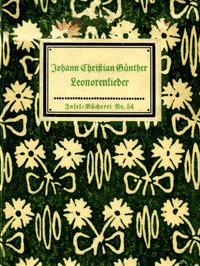
Leonorenlieder by Johann Christian Günther

(4 User reviews)   428
Günther, Johann Christian, 1695-1723 Günther, Johann Christian, 1695-1723
German
Hey, have you heard of this 18th-century poet who basically wrote his heart out for a woman he could never have? Johann Christian Günther's 'Leonorenlieder' is a collection of poems dedicated to Leonore, a woman his family forbade him from marrying. It's raw, it's emotional, and it feels incredibly modern for something written 300 years ago. Think of it as the ultimate, beautifully tragic love letter. You can feel his desperation, his hope, and his crushing disappointment in every line. It's not just old poetry; it's a real person's heartbreak frozen in time. If you've ever loved someone from afar, this will hit you right in the feels.
Share

Read "Leonorenlieder by Johann Christian Günther" Online

This book is available in the public domain. Start reading the digital edition below.

START READING FULL BOOK
Instant Access    Mobile Friendly

Book Preview

A short preview of the book’s content is shown below to give you an idea of its style and themes.

Doch wer sich zwingt und hofft, der kommt gleichwohl ans Land. Was leid' ich nicht um dich, Du mir ins Herz geprägtes Bild! Die Sehnsucht jaget mich, So wie ein schüchtern Wild; Mein Schlaf ist nur ein Qualm, Mein Lied ein Klagepsalm, Die Angst der bangen Einsamkeit Begräbt mich vor der Zeit, Weil ich den Kuß Entbehren muß, Der so viel Lust verspricht; Doch hoff' ich, alles auszustehn, verlass' nur du mich nicht! Verlass' nur du mich nicht, Du Engel, dessen treuer Geist Und holdes Angesicht Mir noch den Troststern weist; Der Himmel wird einmal Uns nach so vieler Qual Der Hoffnung Siegeskranz verleihn Und mich durch dich erfreun! Drum liebe still, Wie ich auch will, Und sieh geduldig zu; Die Straße, so uns jetzo trennt, führt unvermerkt zur Ruh. Ich liebe meinen Schmerz, Weil du, mein Engel, Ursach' bist, Du hast mein ganzes Herz, Dies raubt dir keine List. Was hilft's uns, daß man weint? Was jetzt unmöglich scheint, Das ist gewiß ein Übergang, Der Grillenfang macht krank. Es rühret mich Schon innerlich Ein Trieb der Zärtlichkeit, Die mir dein künftiger Besitz sowie dein Name beut. An seine Magdalis Aria. Erzählt, ihr kalten Nordenwinde, Die Seufzer meiner Schäferin, Verkündigt dem verlass'nen Kinde, Daß ich der alte Redlich bin, Und macht ihr diese Botschaft kund: Das Herze liebet wie der Mund. Des Monden Antlitz sieht die Fluten Der stummen Wehmut kläglich an; Die Geister wollen mir verbluten, Weil ich mein Kind nicht sprechen kann. Ich denke der vergangnen Zeit, Von der mich die Verschwendung reut. Der Elbstrom fällt mir in die Augen, Sein Eis erhitzet meinen Geist; Ach, könnt' ich jetzt die Küsse saugen, Die mich zuvor vollauf gespeist, Ich wollte meinen Fuß bemühn Und gar von hier nach Breslau ziehn. Geliebtes Schweidnitz, das Vergnügen, So mich bei dir im Schoße trug, Wird nicht so bald mein Herz besiegen, Das von der Wollust heftig schlug, Wenn die getreue Magdalis Mich brünstig in die Armen riß. Die Zeiten sind bereits gestorben: Drum fluch' ich der Vergänglichkeit, Die mir und ihr den Schmerz erworben, Den unser Abschied prophezeit, Da mich das werte Sachsenland Von meiner Schäferin getrannt. Getrannt, doch nur auf kurze Jahre! Verliebte Sehnsucht, fasse dich: Der Kummer findet seine Bahre, In dieser Hoffnung tröst' ich mich Und lege mir den Wahlspruch bei: Bedrängt, geduldig und getreu. An seine Leonore Schicke dich, geliebtes Kind, In die unruhvollen Zeiten; Dann und wann kann Sturm und Wind Unverhofft in Hafen leiten. Nun ist wohl niemand besser dran, Als wer getreu und klug und ewig lieben kann. Als er seiner Magdalis nichts zum grünen Donnerstag geben konnte Getreue Magdalis! Du forderst zwar den Zoll, Der jährlich wiederkommt, zum grünen Donnerstage; Doch meine Hand weiß nicht, was sie dir geben soll, Weil ich in selber nichts als Luft und Mangel trage. Kein guter Marzipan, kein Mantel von Damast Läßt meiner Armut zu, dich reichlich zu bedenken, Und weil du gestern schon mein Herz gestohlen hast, So steht es nicht bei mir, es heute dir zu schenken; Doch alles möchte sein, wenn mich die Poesie Des Kummers, deinen Wunsch zu stillen, überhübe. Allein, sie wegert sich. Drum nimm, wo nicht zu früh, Hier die Beständigkeit von meiner reinen Liebe. An Leonoren Zwischen Ufer, Tal und Klüften Ließ der treue Saladin Mit den kühlen Abendlüften Tausend heiße Seufzer fliehn, Weil kein längst gehoffter Brief Seinem Wunsch entgegenlief. Die Gewalt verliebter Schmerzen Warf ihn kraftlos in das Gras, Wo er mit bedrängtem Herzen Und gestütztem Arme saß; Endlich wollte seiner Pein Brust und Herz zu enge sein. Zeuch nur (sang er), schöne Gegend, Deiner Triften Reizung ein! Jetzo...

This is a limited preview. Download the book to read the full content.

Johann Christian Günther was a German poet in the early 1700s, and his life reads like a sad romantic novel. 'Leonorenlieder' is his series of poems written for Leonore, the daughter of a well-to-do family. Günther, a poor student, fell madly in love with her, but her father said no. These poems are the direct, unfiltered result of that forbidden love.

The Story

There isn't a traditional plot. Instead, you follow Günther's emotional journey through verse. The poems swing wildly between ecstatic hope—dreaming of a future together—and deep despair as reality sets in. He praises Leonore's beauty, pleads his case, curses his social standing, and mourns the life they'll never share. It's a real-time chronicle of a young man watching his greatest happiness slip away because of class and family pressure.

Why You Should Read It

What stunned me was how immediate it all feels. You forget these are 300-year-old German poems. The emotion is so naked and relatable. This isn't flowery, distant verse; it's the agonized writing of someone who can't sleep, can't eat, and is pouring everything onto the page. It strips away the formality of his era and shows a universal human experience: loving someone you can't be with.

Final Verdict

Perfect for anyone who thinks classic poetry is stuffy or hard to connect with. Günther proves that heartbreak from 1720 feels exactly like heartbreak today. It's also a great, short read for fans of biographical stories or for anyone who appreciates seeing the raw, personal side of history. Just be ready for a serious dose of melancholy beauty.


📜 Free to Use

This publication is available for unrestricted use. Knowledge should be free and accessible.

George Jackson
5 months ago

At first I wasn’t convinced, but the formatting of this PDF is flawless and easy to read on any device. Simply brilliant.

William Jones
5 months ago

After finishing this book, the content strikes a great balance between detail and readability. This deserves far more attention.

Patricia Rodriguez
3 months ago

I rarely write reviews but the formatting of this PDF is flawless and easy to read on any device. Worth every second of your time.

Ashley Hall
3 months ago

Based on the reviews, I decided to try it and the translation seems very fluid and captures the original nuance perfectly. A solid resource I will return to often.

4.5
4.5 out of 5 (4 User reviews )

Add a Review

Your Rating *
There are no comments for this eBook.
You must log in to post a comment.
Log in

Related eBooks