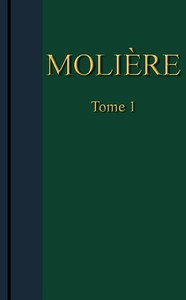
Molière - Œuvres complètes, Tome 1 by Molière

(5 User reviews)   442
Molière, 1622-1673 Molière, 1622-1673
French
Hey, have you ever thought about how some things never change? I just finished this collection of Molière's early plays, and it's wild. It's from the 1600s, but you'll swear he's writing about people you know. The first volume has 'The School for Husbands' and 'The School for Wives'—both hilarious and surprisingly sharp comedies about love, control, and the ridiculous things we do to try and run other people's lives. The main conflict is always between someone trying to impose their strict, outdated rules and the younger, cleverer people who just want to live and love freely. It's like a 17th-century sitcom, but with way better writing and actual insight into human nature. If you think classics are stuffy, this will change your mind.
Share

Read "Molière - Œuvres complètes, Tome 1 by Molière" Online

This book is available in the public domain. Start reading the digital edition below.

START READING FULL BOOK
Instant Access    Mobile Friendly

Book Preview

A short preview of the book’s content is shown below to give you an idea of its style and themes.

L'orthographe a été conservée. Seuls quelques mots ont été modifiés. La liste des modifications se trouve à la fin du texte. OEUVRES COMPLÈTES DE J.-B. POQUELIN MOLIÈRE E. COLIN--IMPRIMERIE DE LAGNY OEUVRES COMPLÈTES DE J.-B. POQUELIN MOLIÈRE NOUVELLE ÉDITION PAR M. PHILARÈTE CHASLES PROFESSEUR AU COLLÉGE DE FRANCE «Chaque homme de plus qui sait lire est un lecteur de plus pour Molière». SAINTE-BEUVE. TOME PREMIER PARIS CALMANN LÉVY, ÉDITEUR ANCIENNE MAISON MICHEL LÉVY FRÈRES 3, RUE AUBER, 3 1888 Droits de reproduction et de traduction réservés JEAN-BAPTISTE POQUELIN MOLIÈRE NÉ LE 15 JANVIER 1622, MORT LE 17 FÉVRIER 1673 «Quel est le plus grand des écrivains de mon règne? demandait Louis XIV à Boileau.--Sire, c'est Molière.» Non-seulement Despréaux ne se trompait pas, mais de tous les écrivains que la France a produits, sans excepter Voltaire lui-même, imprégné de l'esprit anglais par son séjour à Londres, c'est incontestablement Molière ou Poquelin qui reproduit avec l'exactitude la plus vive et la plus complète le fond du génie français. En raison de cette identité de son génie avec le nôtre, il exerça sur l'époque subséquente, sur le dix-huitième siècle, sur l'époque même où nous écrivons, la plus active, la plus redoutable influence. Tout ce qu'il a voulu détruire est en ruine. Les types qu'il a créés ne peuvent mourir. Le sens de la vie pratique, qu'il a recommandé d'après Gassendi, a fini par l'emporter sur les idées qui imposaient à la société française. Il n'y a pas de superstition qu'il n'ait attaquée, pas de crédulité qu'il n'ait saisie corps à corps pour la terrasser, pas de formule qu'il ne se soit efforcé de détruire. A-t-il, comme l'exprime si bien Swift, _déchiré l'étoffe avec la doublure_? l'histoire le dira. Ce qui est certain, c'est que l'élève de Lucrèce, le protégé de Louis XIV, poursuivait un but déterminé vers lequel il a marché d'un pas ferme, obstiné, tantôt foulant aux pieds les obstacles, tantôt les tournant avec adresse. Le sujet de _Tartuffe_ est dans Lucrèce; à Lucrèce appartient ce vers, véritable devise de Molière: _Et religionis..... nodos solvere curo[1]._ La puissance de Molière sur les esprits a été telle, qu'une légende inexacte, calomnieuse de son vivant, romanesque après sa mort, s'est formée autour de cette gloire populaire. Il est un mythe comme Jules César et Apollon. [1] Ce que je veux, c'est rompre les entraves qui nous enchaînent (_religionis.... quod religat_). Dates, événements, réalités, souvenirs, sont venus se confondre dans un inextricable chaos où la figure de Molière a disparu. Tous les vices jusqu'à l'ivrognerie, jusqu'à l'inceste et au vol, lui furent imputés de son vivant. Les vertus les plus éthérées lui furent attribuées par les prêtres de son culte. Homme d'action, sans cesse en face du public, du roi ou de sa troupe, occupé de son gouvernement et de la création de ses œuvres, il n'a laissé aucune trace de sa propre vie, aucun document biographique, à peine une lettre. Les pamphlets pour et contre lui composaient déjà une bibliothèque, lorsqu'un écouteur aux portes, nommé Grimarest, collecteur d'anas, aimant l'exagération des récits et incapable de critique, prétendit, trente-deux ans après la mort du comédien populaire, raconter et expliquer sa vie. Vers la même époque, une comédienne, à ce que l'on croit du moins, forcée de se réfugier en Hollande, jetait dans un libelle les souvenirs de coulisse qu'elle avait pu recueillir sur l'intérieur du ménage de Molière et de sa femme. Enfin quelques détails authentiques, semés dans l'édition de ses œuvres publiée par Lagrange en 1682, complètent l'ensemble des documents comtemporains qui ont servi de base à cette légende de Molière, excellente à consulter,...

This is a limited preview. Download the book to read the full content.

So, you pick up a book from the 1600s expecting something... distant. Molière proves you wrong from the first page. This first volume of his complete works collects some of his early hits, written when he was making a name for himself in Paris.

The Story

Don't let the word 'plays' scare you—the plots are straightforward and incredibly fun. In The School for Husbands, two brothers with opposite parenting styles try to control the futures of their young wards. One is a strict tyrant, the other is easygoing. Guess whose ward outsmarts him to marry the man she loves? Then, in The School for Wives, a wealthy older man named Arnolphe tries to create the 'perfect' obedient wife by raising a young girl in total ignorance. His plan, of course, backfires spectacularly when she falls for a charming young man and Arnolphe's schemes unravel in the most public and humiliating ways.

Why You Should Read It

I loved this because Molière doesn't just make you laugh; he makes you think. He's poking fun at hypocrisy, control, and the arrogance of thinking you can design another person's life. The characters aren't just historical figures—they're the overbearing relative, the clueless boss, the know-it-all friend we all recognize. The dialogue is witty, the situations are absurd, and the victories of the young lovers feel genuinely satisfying.

Final Verdict

This is perfect for anyone who loves smart comedy, whether you usually read classics or not. It's for readers who enjoy shows or books where clever characters outwit pompous ones. If you've ever felt frustrated by rigid rules or enjoyed seeing a hypocrite get their comeuppance, you'll find a kindred spirit in Molière. It's a brilliant, accessible reminder that great writing about human folly is truly timeless.


🔖 Copyright Status

This publication is available for unrestricted use. It is available for public use and education.

Brian Wilson
3 weeks ago

I approached this with an open mind and the writing remains engaging even during complex sections. I’ll definitely revisit this in the future.

Christopher White
3 months ago

During my studies, I found that it serves as a poignant reminder of the human condition. I would gladly recommend this to others.

Anthony Martin
5 months ago

I wasn’t planning to read this, yet the organization of topics is intuitive and reader-friendly. It is definitely a 5-star read from me.

Kevin Davis
3 months ago

As part of my coursework, the structure allows easy navigation and quick referencing. I couldn't put it down until the very end.

Susan Lewis
2 months ago

From a casual reader’s perspective, the narrative structure is incredibly compelling and well-thought-out. I finished this feeling genuinely satisfied.

4.5
4.5 out of 5 (5 User reviews )

Add a Review

Your Rating *
There are no comments for this eBook.
You must log in to post a comment.
Log in

Related eBooks